Are you among the millions of Americans who struggle with sleep issues? According to the National Institute of Health, 50 to 70 million of us have chronic sleep problems, but you don't have to be one of them. Achieving restful, restorative sleep is a cornerstone of overall health, affecting everything from your mood and productivity to your long-term wellness. A single good night's sleep isn't enough; it's about creating a consistent routine and an environment that supports deep, satisfying slumber night after night. In this blog, we'll guide you through the essential elements to craft your personal sleep sanctuary, ensuring you get the best rest possible.
Setting the Foundation: Choosing Your Perfect Mattress
The cornerstone of any sleep sanctuary is a supportive mattress. According to experts, a truly supportive mattress is one that maintains your spine's natural curves for back sleepers and keeps it in a neutral position for side sleepers. To find your ideal match, consider the amount of bounce you like and how far you prefer to sink into your bed, reflecting on your past sleep experiences. The three basic mattress types—innerspring, foam, and adjustable air—each deliver a distinctly different experience. Let's delve into what you can expect:
-
Foam Mattresses: Constructed entirely of foam layers—memory foam, non-memory polyurethane foam, or latex—these mattresses offer a cradling, cushiony feel. They excel at motion isolation (stability), meaning you won't be as jostled by a shifting partner, pet, or child. However, some sleepers may find them difficult to move around in, and they tend to retain more heat than innerspring mattresses.
-
Feel Nuances: With memory foam, you can expect to sink slowly into curve-conforming layers. Non-memory polyurethane foam cradles without that slow, contouring sink, making it easier to shift positions. Latex, made from liquid from rubber trees, provides cushioning with a subtly springy feel. Many mattresses use foam combinations, mixing types, with the top layer having the most impact on the overall feel.
-
-
Innerspring Mattresses: These have a steel-coil foundation topped with fiber padding (cotton, wool), foam, or both. They are more resilient than foam, allowing you to shift positions easily, and retain less heat. While they can be more budget-friendly than air mattresses, they tend to earn lower stability scores. (Note: Innersprings with individually wrapped coils perform better for motion isolation.)
-
Adjustable Air Mattresses: These utilize air chambers at their core, topped with foam or padding. You can inflate or deflate the chambers to adjust the firmness level. For queen or king sizes, you can even designate separate air chambers for each side, allowing customized firmness for each partner. Available features might include an adjustable bed frame to raise or lower your head or foot. These, however, are typically expensive.
Choosing the Right Fit and Features
Beyond type, several other factors truly matter when choosing your mattress:
-
Firmness Level: This is subjective; one brand's "firm" may be another's "medium." To help you compare accurately, our ratings measure each mattress on a scale from 1 (extremely soft) to 10 (extremely firm) against an industry standard.
-
Durability: Some wallet-friendly mattresses can be quite durable. To assess durability, our experts simulate eight to 10 years of use by running a 300-plus-pound wood roller across each surface 30,000 times. See our ratings chart for details.
-
Breathability: For hot sleepers, look for models that allow more airflow, which means less trapped heat. Generally, innerspring models retain less heat due to the coils, but a mattress's overall construction is key. Check out our reviews for the "Best Mattresses for Hot Sleepers" for top picks.
-
Certifications: That "new mattress smell" is the off-gassing of volatile organic compounds (VOCs). If you are sensitive to chemicals, have allergies, or a respiratory condition, consider a mattress that is certified for low levels of potentially toxic chemicals. Look for GOTS (Global Organic Textile Standard) Organic certification (requiring 95% or more organic fibers), or the Oeko-Tex Standard 100 label, which indicates a mattress has been tested for harmful substances. Before using any new mattress, let it off-gas with the windows open until the odor dissipates. Check out our list of the best low-VOC mattresses.
-
Size: Consider bedroom space and occupants. Common sizes include:
-
Twin: 38x75 inches. Great for small children/bedrooms, fits one.
-
Twin XL: 38x80 inches. Popular for growing teens and students, fits one.
-
Full/Double: 54x75 inches. Good for guest rooms, comfortably sleeps one, can accommodate two smaller people.
-
Queen: 60x80 inches. The most commonly sold size, tested by CR. Fits two comfortably; recommends a bedroom of at least 10x10 feet.
-
King: 76x80 inches. Ideal for couples, offers ample room. Best for larger bedrooms of at least 12x12 feet.
-
California King: 72x84 inches. Longest common size, great for taller couples. Also best for larger bedrooms (min 12x12 feet).
-
Enhancing Comfort: Mattress Toppers, Sheets, and Pillows
Mattress Toppers: A Comfort Upgrade
If your supportive mattress isn't quite cradling enough, or if it feels too firm, a mattress topper might be just what you need for deeper, more restful sleep. Typically 1 to 4 inches thick and made of foam, latex, fibers, or feathers, toppers add a layer of cushioning that can improve sleep comfort, relieve pressure points (especially beneficial for side and back sleepers), and reduce motion transfer. Gonzalez-Fernandez notes, "Once you lie on one, you sink into it, and it holds the shape of the body."
However, a topper is not a substitute for a worn-out mattress; it will not make a mushy mattress supportive or fix a lumpy, worn-out one. Once a mattress fails its core purpose, it's time to replace it.
Cons to Consider: Mattress toppers can have a downside, particularly synthetic materials like memory foam that don't breathe well and can hold in heat. Look for features added to address this, like graphite, gel, or copper, although it's unclear whether these are in effective concentrations.
Choosing Your Topper Material:
-
Memory Foam: Envelops the body, providing excellent cushioning and pressure relief. Highly rated brands include Bed Story, Tempur-Pedic, and Viscosoft.
-
Other Foams (Egg-crate, Convoluted, Polyfoam): Less dense, less cushy, and less supportive than memory foam, but less likely to leave you roasting and considerably less expensive.
-
Latex: May be the springiest material, naturally cooling with tiny air pockets throughout. Natural latex options often carry certifications like GOLS. Highly-reviewed brands include Avocado, Saatva, Brooklyn Bedding, and Naturepedic.
-
Wool, Cotton, Other Fiber Fills: Feel more like a fluffy pad than deeply springy/supportive, but tend to be breathable and naturally regulate heat. PlushBeds and Birch offer natural options.
-
Down, Other Feathers, Downlike Fill: Provide fluffy padding with less heat-trapping than memory foam. Look for ethical certifications like RDS or Global TDS for genuine down. Lucid, Parachute, and Restful Nights are brands to consider.
Shopping and Care Tips for Toppers:
-
Fit: Toppers can add significant height to your mattress, potentially making it hard to get your sheets to fit. Look for toppers with straps to help them stay put.
-
Cleaning: Almost no latex or foam topper can be washed, only spot-cleaned. Others filled with wool, cotton, or down may require dry-cleaning or be machine-washable—always check the label. A removable, washable cover is a plus.
-
Return Policy: Retail return policies vary widely, and trying out toppers in-store is rare. Costco allows returns on Tempur-Pedic toppers, while the manufacturer does not. Some brands offer generous tryout periods.
The Perfect Sheet Set
Once your bed is supportive and cushioned, choose sheets that provide a snug fit and comfortable temperature. We recommend choosing sheets that are 2-3 inches deeper than your mattress to make sure they stay on the bed. If you sleep hot, choose 100% cotton sheets for better breathability and temperature regulation. Consider the weave: crisp, matte percale feels cool and airy, while smooth, glossy sateen can feel warmer. While synthetic fibers can be exceptionally soft, synthetics aren't as breathable as cotton, making them not the best choice if you sleep hot.
Don't buy sheets based on high thread count alone, as testing does not connect these numbers with actual durability or comfort.
Pillows for Spinal Alignment
Pillows are vital for keeping your spine in neutral alignment, preventing achy mornings. The ideal pillow offers the right thickness or loft for your sleep position:
-
Back Sleepers: Supported best by a medium loft pillow (3-5 inches thick) that cradles the neck without pushing the head forward.
-
Side Sleepers: Require a firmer, high loft pillow (at least 5 inches thick) to fill the space between the head and shoulder, maintaining neck alignment.
-
Stomach Sleepers: Best supported by a low loft pillow (less than 3 inches thick) to avoid craning the neck upward.
Consider contouring and adjustable filled pillows that can adapt to different sleep positions. Breathability and washability add to long-term comfort. Whenever possible, test a pillow in-store and buy online only with a generous return or trial policy.
Optimize Your Environment: Light, Air, and Temperature
Block Out the Light
Light pollution can significantly disrupt sleep quality. Blackout curtains are essential for stopping light from entering your room. For maximum effectiveness, look for curtains with a bonded or layered backing designed to block light, not just dim it. Good blackout curtains can also make your room feel warmer in winter and reduce heat penetration in summer. Choose fabrics like triple weave or solution-dyed polyester that resist fading and deterioration from sun exposure and washing. Skip lightweight panels without a lining or narrower sizes that can leave vertical gaps.
Breathe Clean Air
It's hard to sleep well if you're sneezing or coughing. A quality air purifier can filter out common allergens like dust, pollen, and pet dander, improving your respiratory comfort overnight, and can even provide soothing white noise. Choose a model that is effective at removing particles and delivering a high volume of clean air, with a true HEPA filter that captures at least 99.97% of airborne particles like smoke, dust, and pollen. An activated carbon filter is useful for tackling odors.
Ensure the air purifier is rated for the size of your room. Maintain efficiency with auto mode, allowing the purifier to adjust its speed, and simpler maintenance with filter change indicators. Since noise level is critical for sleep, opt for a model that is quieter, with effective cleaning even at lower speeds.
Stay Cool
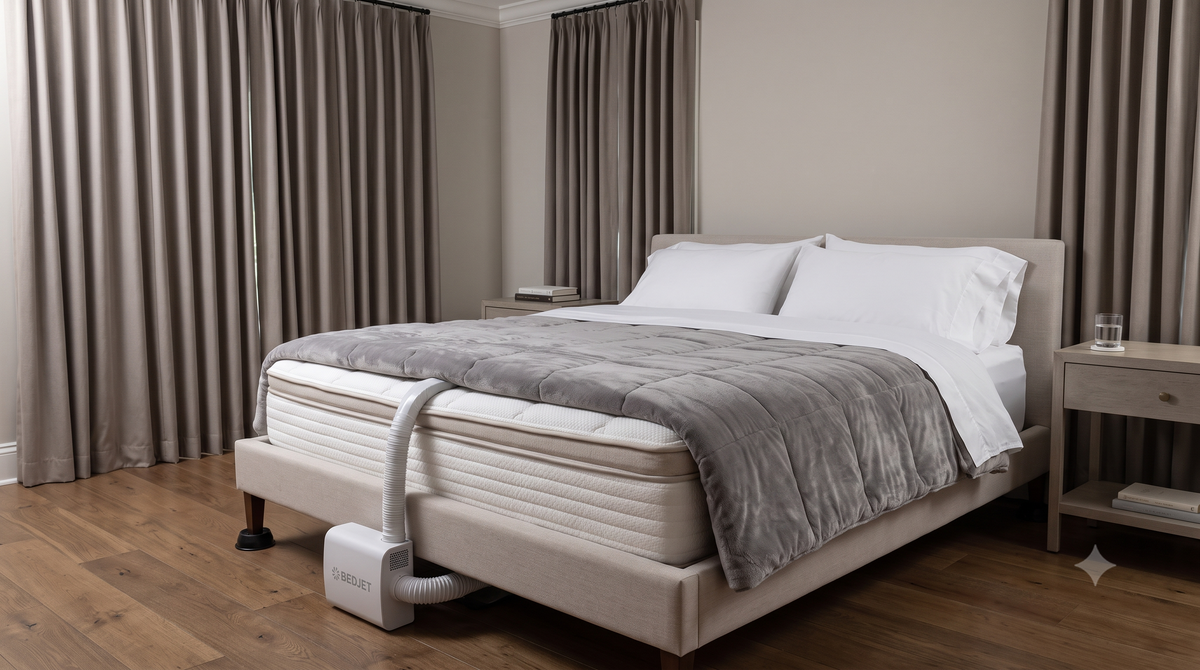
If you sleep extra hot, you might consider adding a bed cooling system. Intelligent options to explore include the Eight Sleep system, the BedJet 3, and the ChiliPad 2.0.
A Silent and Stable Night: The Crucial Final Element
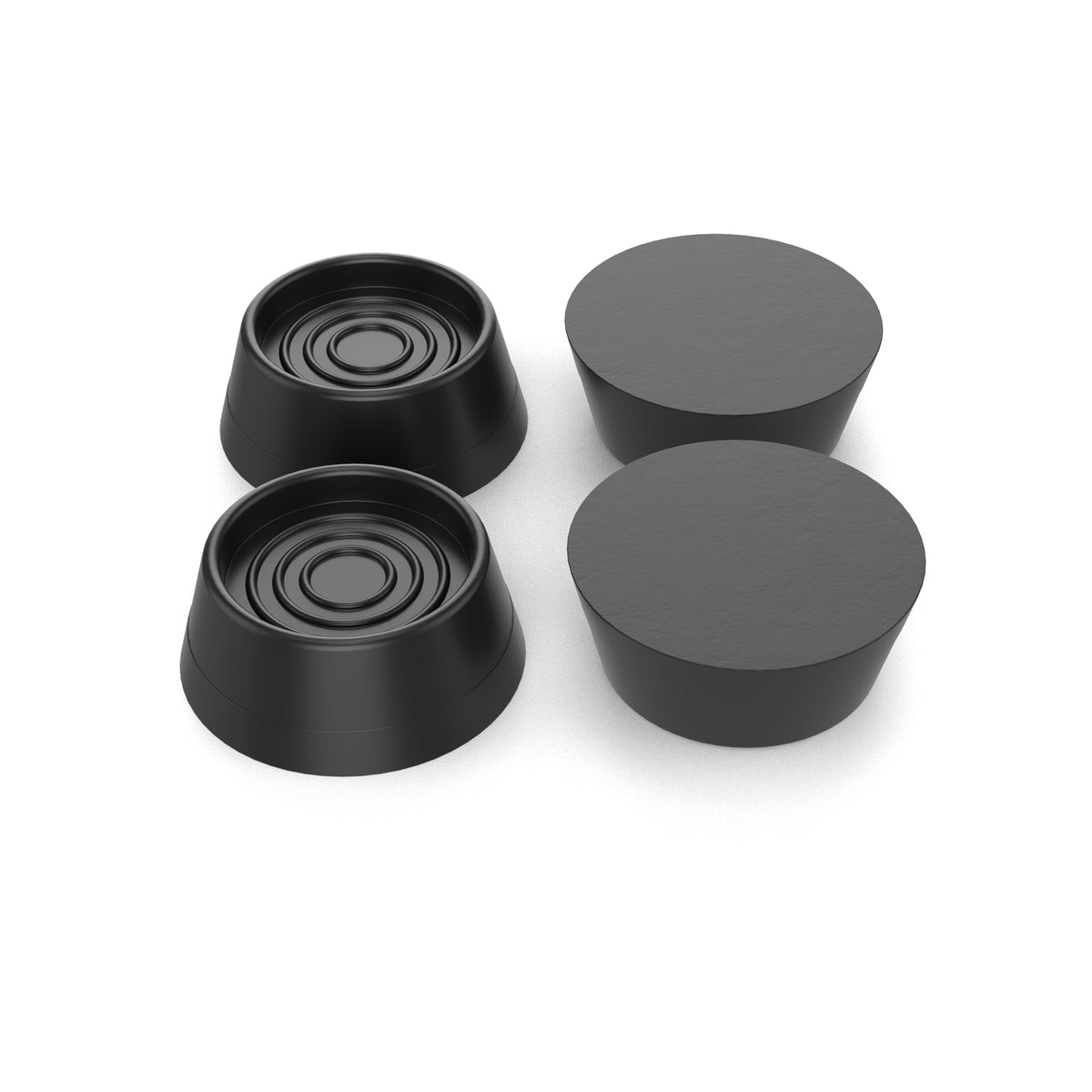
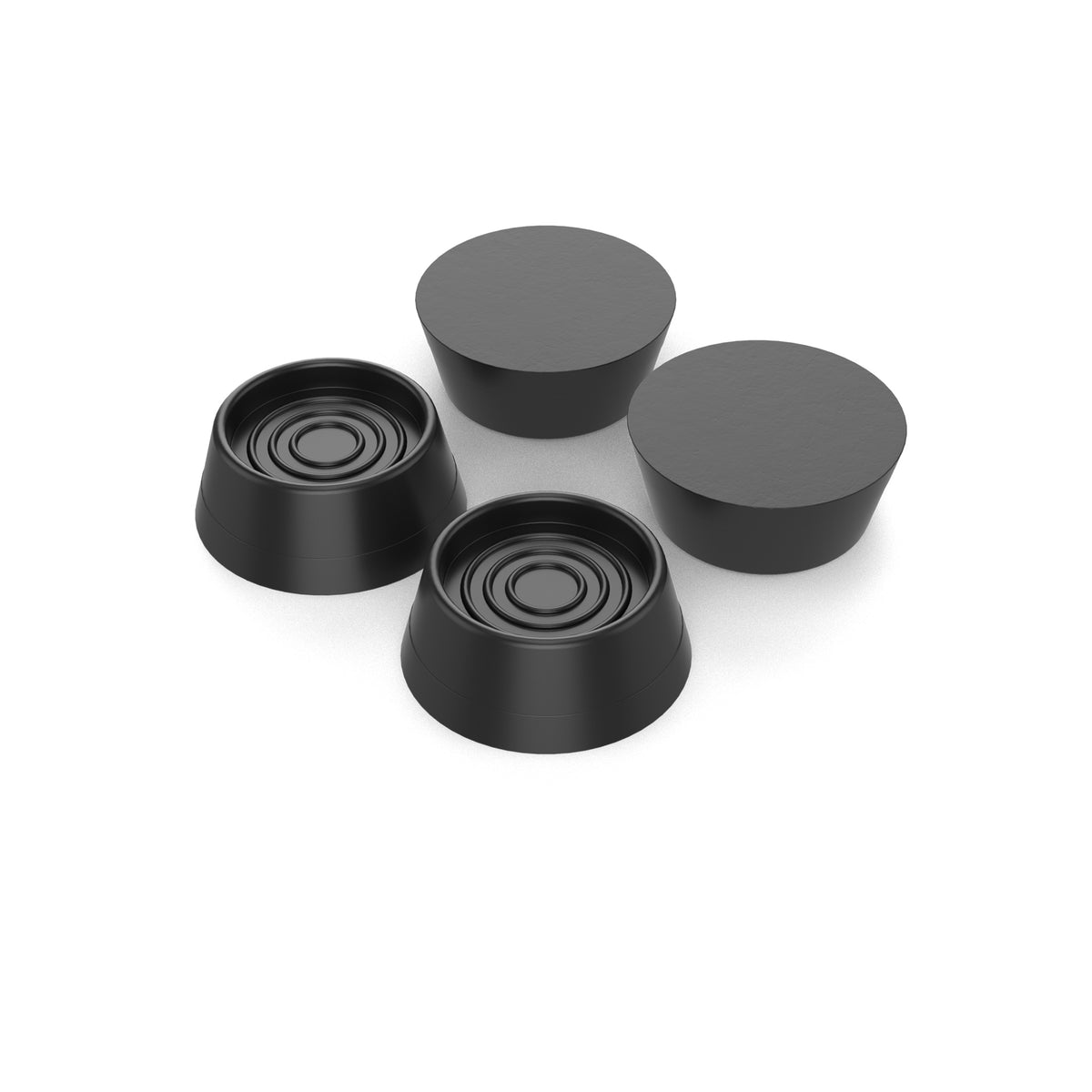
One final, oft-overlooked element of perfect sleep is stabilizing your bed itself. Your bed structure can be a major source of noise, particularly if it sits on hard flooring, vibrating or squeaking with your every movement. A restless sleeper or a partner shifting can send disturbing vibrations across the bed frame.
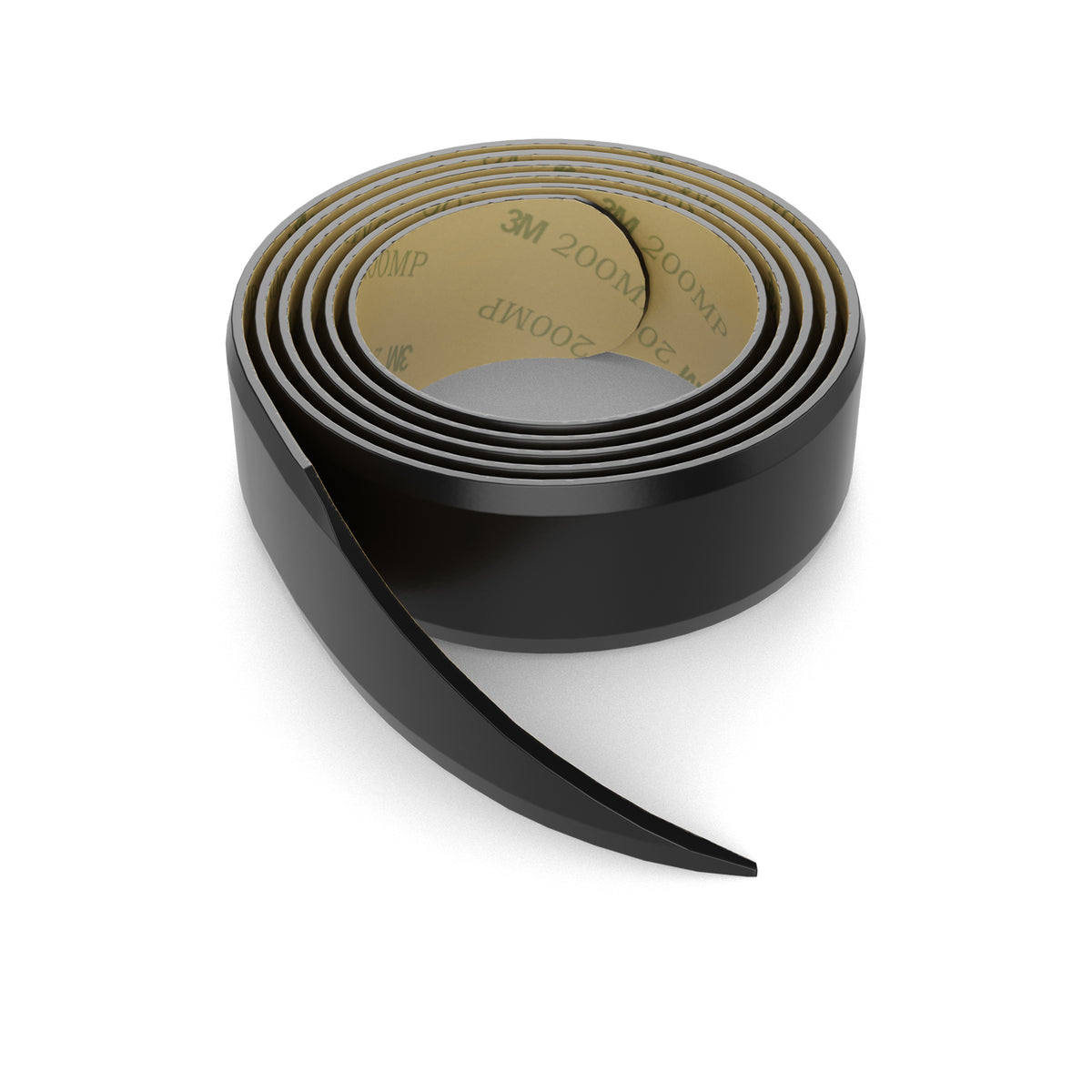
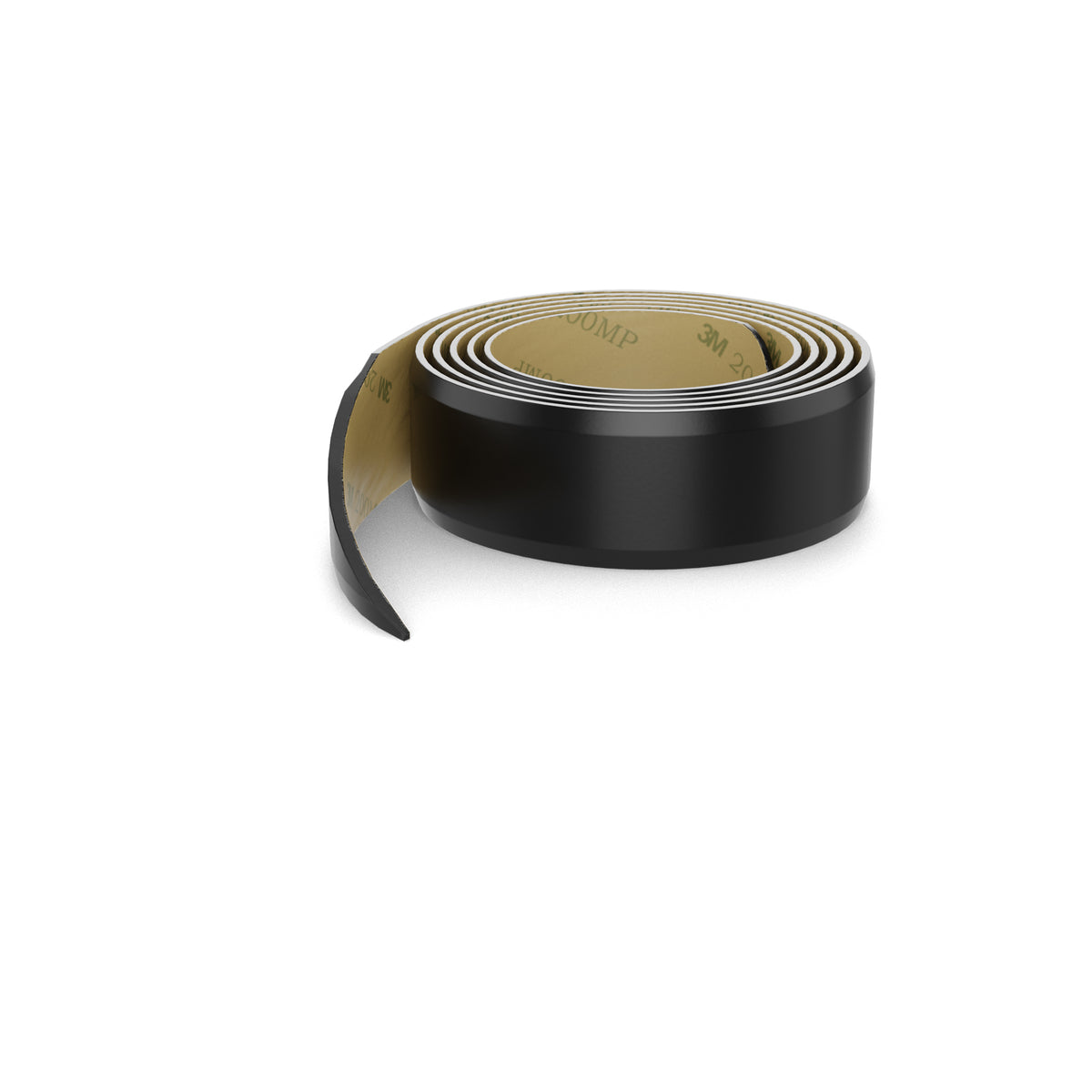
We highly recommend installing Silent Feet for Beds. These innovative, high-performance risers function as superior, all-surface anti-vibration pads and vibration barriers. They effectively absorb and dampen the vibrations from movement before they can travel through your bed frame, creating a silent and stable environment for truly undisturbed rest. If you are aiming for the ultimate night's sleep, don't forget to address the very feet your bed stands on.
Crafting your ultimate sleep sanctuary is an investment in your well-being. By finding the best combination of these essential elements—from the foundation of your mattress to the finishing touches that ensure quiet and comfort—you can look forward to waking up refreshed, restored, and ready for whatever the day brings.