Hey everyone, Ian here.
If you’ve been watching the news from Kennedy Space Center over the last few days, you know that the "final frontier" just threw us a bit of a curveball. NASA has announced a major overhaul of the Artemis program architecture.
As someone who spends every day obsessed with vibration and system reliability, I find this "back to basics" approach incredibly exciting. Let’s break down the new schedule and what it means for the future of space exploration.
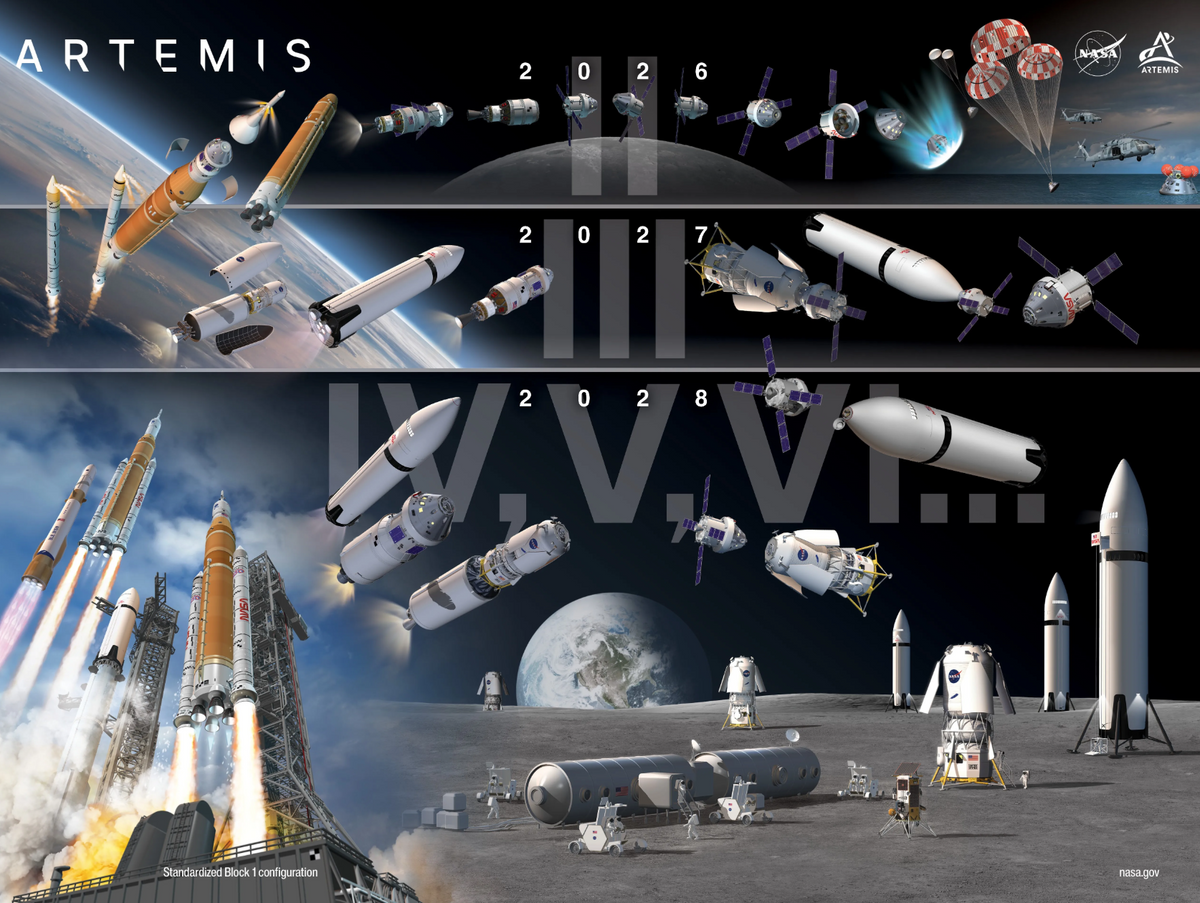
The New Artemis Roadmap: 2026–2028
The headline is simple: NASA is choosing safety and standardization over speed. Following a series of technical hurdles and a recommendation from the Aerospace Safety Advisory Panel, the agency is shifting to a more evolutionary mission sequence.
-
Artemis II (Targeting April 2026): Our first crewed mission of the SLS/Orion stack was recently rolled back to the Vehicle Assembly Building (VAB) to troubleshoot a helium flow issue in the upper stage. While we were all hoping for a March launch, NASA is now targeting No Earlier Than (NET) April 2026. This 10-day mission will still send four astronauts around the Moon and back, testing the life-support systems that will sustain them in deep space.
-
Artemis III (2027): This is the biggest change. Originally slated as the first lunar landing since 1972, Artemis III has been "rescoped." It is now a Low Earth Orbit (LEO) mission—essentially an "Apollo 9" for the modern era. This flight will focus on the first-ever docking maneuvers between the Orion spacecraft and the new commercial landers (SpaceX’s Starship and Blue Origin’s Blue Origin's Blue Moon), as well as testing the next-gen xEVA spacesuits in microgravity.
-
The Big Landing (2028): The first actual return to the lunar surface is now shifted to Artemis IV in 2028. By inserting that extra LEO test flight in 2027, NASA is ensuring that every system—from docking to propulsion—is battle-hardened before we attempt a touchdown at the lunar South Pole.
Standardization: The Key to a Yearly Cadence
One of the most significant parts of this overhaul is the decision to standardize the SLS rocket configuration. Instead of jumping immediately to the more complex "Block 1B" design, NASA is sticking with the proven Block 1 configuration for the near future. The goal is to move away from one launch every 18–24 months and reach a "steady state" of one launch per year (or possibly every 10 months!).
How Isolate IT Supports the Mission
So, where do we fit in?
The Space Launch System (SLS) core stage is the world's most powerful rocket. That power comes with a cost: extreme vibration. From the moment of ignition through the max-Q phase of ascent, sensitive electronics and scientific instruments are subjected to forces that would tear standard hardware apart.
At Isolate IT, we continue to work with engineers in both the private sector (partners like SpaceX and Boeing) and NASA to provide the viscoelastic solutions that make these missions possible:
-
Launch Protection: Our specialized Sorbothane® components are used as isolation barriers for delicate sensors and instrumentation. By absorbing the high-frequency energy of the SLS launch, we ensure that the "brains" of the spacecraft remain functional under the most violent conditions imaginable.
-
Re-entry Stability: Vibration isn't just a launch problem. During re-entry, the Orion capsule faces intense thermal and vibrational stress as it hits the atmosphere at 25,000 mph. Our materials help stabilize the internal crew interfaces and communications hardware, ensuring a safe splashdown.
-
Supporting the Private Sector: As NASA leans more on commercial landers from SpaceX and Blue Origin, we are right there in the labs with them. Our Sorbothane sheets and custom gaskets are the "secret weapon" for private space companies looking to meet NASA’s rigorous safety and reliability standards.
Final Thoughts
The Artemis program is moving from a "one-off" experimental phase to a sustainable, repeatable architecture. By choosing standardization and incremental testing, NASA is building a bridge to the Moon that is meant to last.
At Isolate IT, we’re proud that our heritage in space exploration continues to play a role in every step—and every launch—of that journey.
What do you think of the new Artemis schedule? Is "slow and steady" the right move for the Moon? Let’s discuss in the comments!